How to pick a travel credit card in Australia

If you want a simple answer, the Qantas Money Everyday Credit Card is our top pick among travel credit cards in Australia right now. It leads because it earns Qantas Points at a decent rate while charging just A$99 a year, the lowest annual fee on this shortlist. That keeps the fee from eating your rewards before you've even packed a bag. Below you'll find a side-by-side table of six cards, then a closer look at the top few, and some plain guidance on matching a card to how you actually spend.
| Card | Annual fee | What it earns | Sign-up offer | Best for |
|---|---|---|---|---|
| Qantas Money Everyday Credit Card | A$99 a year | 0.75 Qantas Points per $1 on domestic spend up to A$3,000 | 8,000 bonus Qantas Points after spending $3,000 in 90 days | Low-fee Qantas earners |
| Virgin Australia Velocity Flyer Credit Card | A$149 a year | 0.66 Velocity Points per $1 up to $1,500 per statement period | Up to 70,000 bonus Velocity Points | Velocity flyers wanting a voucher |
| Bank Australia Platinum Rewards Visa Credit Card | A$189 a year | 0.75 Qantas Points for every $1 spent | None listed | Flat-rate Qantas earners |
| Bankwest Qantas World Mastercard | A$320 a year | 1 Qantas Point per $1 on the first $5,000 each month | Up to 100,000 bonus Qantas Points | High spenders, no overseas fees |
| Bendigo Bank Qantas Platinum Credit Card | A$149 a year | 0.6 Qantas Points per $1, capped at 20,000 per period | None listed | Steady, modest earners |
| Virgin Australia Velocity High Flyer Credit Card | A$329 a year | 1 Velocity Point per $1 up to $8,000 per statement period | Up to 100,000 Velocity Points | Frequent Virgin flyers wanting lounge passes |
The top travel cards in Australia, looked at closely
Qantas Money Everyday Credit Card
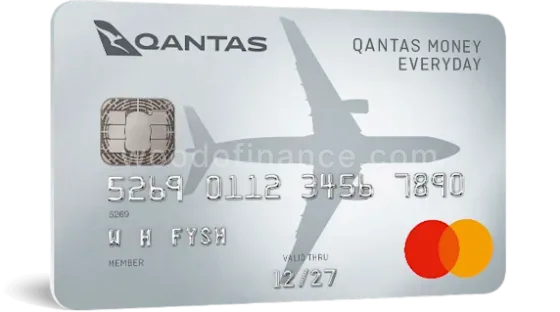
The Qantas Money Everyday Credit Card suits anyone who collects Qantas Points and doesn't want a steep fee working against them. At A$99 a year, it's the cheapest card here, and it earns 0.75 Qantas Points per whole AU$1 on domestic spend up to and including AU$3,000, then 0.4 points above that. International spend earns 1.0 Qantas Point per AU$1 equivalent. The sign-up offer is 8,000 bonus Qantas Points when you spend $3,000 or more on eligible purchases within 90 days of approval.
It also comes with complimentary travel insurance, including overseas medical emergency cover of up to $1,000,000 and trip cancellation cover of up to $20,000 on travel booked with the card. The catch: the purchase rate is 20.99% p.a., and there's a 3% foreign transaction fee, so carrying a balance or spending overseas chips away at the value. Confirm the current bonus on the card's page before you apply, since these offers change.
Virgin Australia Velocity Flyer Credit Card

If you fly Virgin and collect Velocity Points, the Virgin Australia Velocity Flyer Credit Card is the natural starting point. It earns 0.66 Velocity Points per $1 on eligible transactions up to $1,500 each statement period, then 0.5 points thereafter. Spend directly with Virgin Australia and you pick up an extra point per dollar, with 5 points per $1 on eligible Virgin Australia flights.
The sign-up offer runs up to 70,000 bonus Velocity Points: 25,000 for each of the first two months you spend $1,500 or more within 60 days of approval, plus 20,000 for keeping the card open past 12 months. You also get a $129 Virgin Australia gift voucher each year, subject to a qualifying retail purchase. The fee is A$149 a year and the purchase rate is 20.74% p.a. There's no foreign transaction fee listed, so weigh that if you spend abroad.
Bank Australia Platinum Rewards Visa Credit Card

The Bank Australia Platinum Rewards Visa Credit Card keeps things simple with a flat 0.75 Qantas Points for every $1 spent, with no tier that drops the rate on bigger spend. That flat structure can suit people whose spending jumps around month to month. The annual fee is A$189 a year, and the purchase rate is 20.24% p.a., the lowest of the Qantas-earning cards here.
You get complimentary international travel insurance when you meet the spending and eligibility criteria, plus up to 55 days interest free on purchases. There's a 3% foreign transaction fee, and no sign-up bonus is listed, so the appeal is the steady earn rather than an upfront points haul. If a one-off bonus matters more to you, look at the cards above and below.
Bankwest Qantas World Mastercard
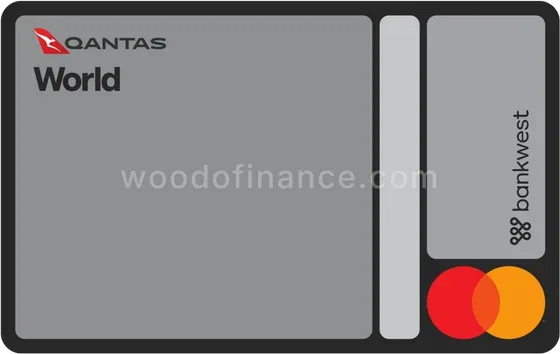
The Bankwest Qantas World Mastercard is the card for higher spenders who travel overseas. It earns 1 Qantas Point per $1 on the first $5,000 of eligible purchases each month, then 0.5 points thereafter, uncapped. The standout for travellers is that it charges no foreign transaction fee, which is rare on this list and genuinely useful if you spend in other currencies.
The sign-up offer is up to 100,000 bonus Qantas Points, but you need to spend $35,000 on eligible purchases within five months, keep the card open for 15 months, and not have held a Bankwest Qantas Mastercard in the last 24 months. The annual fee is A$320 a year, the highest here, so this card earns its keep only if you put real volume through it. It includes overseas travel insurance and purchase security insurance too.
How to choose a travel card in Australia for your own spending
Start with two columns of the table: the annual fee and the earn rate. A big sign-up bonus is appealing, but the annual fee repeats every year while the bonus lands once. Read the fee first, then check whether your yearly spend produces enough points to clear it comfortably.
Next, decide which program you actually use. Four of these cards earn Qantas Points and two earn Velocity Points. Pick the one that matches the airline you fly and the loyalty account you already hold, because points you can't easily use are worth nothing. Then look at the earn caps. The Velocity Flyer rate drops after $1,500 each statement period, while the Bankwest card holds its top rate to $5,000 a month, so your monthly spend changes which card comes out ahead.
If you spend overseas, the foreign transaction fee matters as much as the earn rate. Most cards here charge 3%, but the Bankwest Qantas World Mastercard charges none. For a clear picture of where your money actually goes each month, it helps to turn a few bank statement PDFs into a tidy spreadsheet and see which categories dominate before you commit.
How we picked these cards
This shortlist comes from the 33 travel cards Woodo lists for Australia. The figures here were recorded on 13 September 2026, and the order follows our ranking basis: estimated yearly rewards on a typical spending mix, minus the annual fee, with cards that publish no reward rates following, cheapest annual fee first. No issuer pays Woodo for placement, and no issuer can pay to move a card up the list. You can see the full set and filter it yourself on the Australian travel card comparison.
Your next step
Pick the one or two cards from the table that match your airline and your monthly spend, then open each card's page and confirm the current sign-up offer and fees before you apply. If you're not sure which spending categories drive your points, uploading a few months of statements to Woodo shows which ones dominate, and that's usually what decides the right card. When you're ready to compare the wider field, browse the full Australian credit card listing.
FAQ
What is the cheapest travel credit card in Australia on this list?
The Qantas Money Everyday Credit Card has the lowest annual fee here at A$99 a year. It earns 0.75 Qantas Points per $1 on domestic spend up to A$3,000 per period, then 0.4 points above that, and 1.0 point per $1 on international spend. A lower fee means your points start working for you sooner, since you don't need to earn as much before the card pays for itself. If keeping costs down is your priority and you collect Qantas Points, it's the natural first choice. Check the card's page for the current fee and offer before applying.
Do these travel cards charge a fee on overseas spending?
Most do, but one doesn't. The Qantas Money Everyday Credit Card and the Bank Australia Platinum Rewards Visa Credit Card both charge a 3% foreign transaction fee. The Bankwest Qantas World Mastercard charges no foreign transaction fee, which makes it the standout for anyone who spends in other currencies. That 3% adds up fast on a holiday, so if a chunk of your spending happens overseas, the fee can matter more than the earn rate. Always confirm the current fee on the card's page, because terms change.
How do the sign-up offers actually work?
Each one requires a minimum spend within a set window after approval. The Qantas Money card gives 8,000 bonus Qantas Points after you spend $3,000 within 90 days. The Virgin Australia Velocity Flyer offers up to 70,000 Velocity Points across monthly spend targets plus a loyalty bonus at 12 months. The Bankwest card's up to 100,000 points needs $35,000 spent in five months. Read the conditions carefully, since some require you to keep the card open for a year or longer. Confirm the current offer on the card's page before applying, as these change often.
Which card suits a frequent Virgin Australia flyer?
Both Virgin cards earn Velocity Points and give a $129 Virgin Australia gift voucher each year. The Velocity Flyer costs A$149 a year and earns 0.66 points per $1 up to $1,500 each period. The Velocity High Flyer costs A$329 a year, earns 1 point per $1 up to $8,000 each period, and adds two complimentary lounge passes and up to 100 bonus status credits a year. If you fly Virgin often and value lounge access, the High Flyer carries more perks. If you fly occasionally, the lower-fee Flyer is easier to justify.
Are Qantas Points or Velocity Points better?
Neither is universally better; it depends on which airline you fly. Four cards here earn Qantas Points and two earn Velocity Points. Choose the program tied to the airline and loyalty account you already use, because points are only valuable if you can redeem them on flights you'd actually take. If you fly Qantas, a Qantas-earning card like the Qantas Money Everyday Credit Card or the Bankwest Qantas World Mastercard makes sense. If you fly Virgin, pick one of the Velocity cards. Matching the program to your travel is the single biggest factor.
What interest rate do these travel cards charge?
Purchase rates on this shortlist sit between 19.99% p.a. and 20.99% p.a. The Bankwest Qantas World Mastercard and the Bendigo Bank Qantas Platinum Credit Card are both at 19.99% p.a., while the Bank Australia card is 20.24% p.a. Travel cards reward you for spending, but the points are only worthwhile if you clear the balance each month. Carrying debt at these rates will quickly outweigh any points earned. Treat the card as a payment tool you pay off in full, and the rewards stay ahead of the costs.
What should I check before applying for a travel card?
Check the annual fee, the earn rate for your airline, the foreign transaction fee, and the sign-up conditions. Confirm you can meet any minimum spend without stretching your budget, and make sure the loyalty program matches the airline you fly. Review the travel insurance terms too, since cover often depends on meeting spending or eligibility criteria. Finally, look at your own recent statements to see how much you spend each month and in which categories, because that determines whether the points outweigh the fee. The card's own page carries the current, binding terms.
Stop logging every coffee.Do it on a Sunday.
One PDF, once a month. Woodo's AI pulls every transaction, sorts by category, and shows you where the money went — finished before your coffee cools.
More from Woodo Blog
Which cashback credit card in the UK actually pays you?
Woodo's top cashback pick in the UK is the Santander UK Rewards Credit Card, which pays 3% on fuel, everyday travel and eating out in your first year. Here's how it compares with five other cards and which one fits your spending.

Which cash back card actually pays you back in Canada?
Woodo's top cash back pick in Canada is the Desjardins Cash Back World Elite Mastercard, which earns up to 4% on every purchase. Here's how it stacks up against the rest of the shortlist, including two no-fee options.

Which US cash back credit card actually pays you most?
Woodo's top cash back pick is the Wells Fargo Active Cash Card, which pays a flat 2% on every purchase with no annual fee. Here's how it compares to five other US cards and which one fits your spending.