Which cashback credit card in Singapore actually pays you back?

If you want a straight answer, Woodo's top pick among cashback credit cards in Singapore is the CIMB Visa Signature. It leads because it pays up to 10% on both online shopping and groceries, two categories most people here spend on every week, and it charges no annual fee at all. That combination of a high headline rate and zero holding cost is hard to beat for everyday spending. The rest of the shortlist earns its place for different reasons, and the right card for you depends on where your money actually goes each month.
Below is every card Woodo lists in this category's shortlist, in ranked order, with the one fact that matters most for each. Figures were recorded on 4 October 2026.
| Card | Annual fee | What it earns | Sign-up offer | Best for |
|---|---|---|---|---|
| CIMB Visa Signature | No annual fee | Up to 10% on online shopping and groceries | Samsonite spinner (worth S$1,150) for S$2,000 spent in 60 days | Online shoppers and grocery buyers |
| UOB One Credit Card | S$196.20 a year | 3.33% on everything with steady monthly spend | None listed | Consistent spenders who hit the thresholds |
| Citi Cash Back Card | S$196.20 a year | Up to 8% on transport and fuel, 6% on dining and groceries | S$300 cash back for S$800 spent in 2 months | Drivers and commuters who dine out |
| BOC NVMO Card | S$207.10 a year | Up to 10% on dining and food delivery | None listed | Heavy diners and streamers |
| UOB UnionPay Card | No annual fee | Flat 2% on all local and overseas spend | None listed | Simplicity seekers and China travellers |
| DCS Ultimate Platinum Mastercard | S$10 a month plus GST (S$130.80 a year with GST) | Flat 2%, 4% on direct travel bookings | Gojek vouchers plus a GOTRIP luggage bag | Travellers who want flat-rate cashback |
The top cashback cards in Singapore, card by card
CIMB Visa Signature
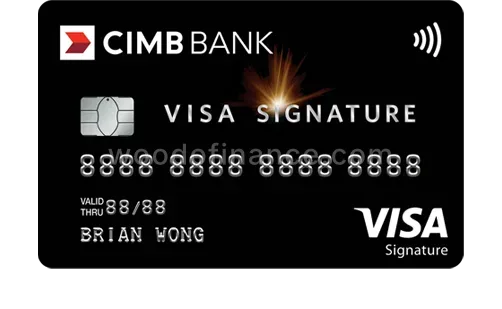
This is the card for people who buy a lot online and do their weekly shop on card. The CIMB Visa Signature pays up to 10% on online shopping and up to 10% on groceries, with the same 10% rate extending to beauty and wellness, pet shops and vets, and cruises. There's no annual fee, for life, so nothing eats into what you earn.
The catch is the cap structure. You need to spend S$800 in the statement month to earn the bonus, and each category is capped at S$20, with a total cap of S$100 a month. Everything above those caps, and all other spend, drops to 0.20%. New cardmembers who spend S$2,000 in the first 60 days get a Samsonite Black Label Fanthom Spinner worth S$1,150, with that offer ending 30 November 2026. Check the card's page for the current terms before you apply.
UOB One Credit Card
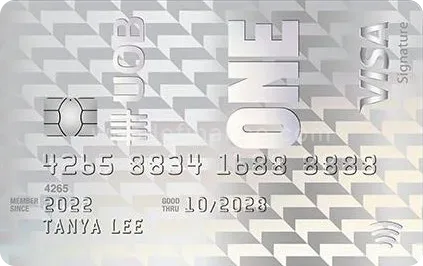
The UOB One Credit Card rewards consistency rather than category. It pays 3.33% on everything, but only if you spend S$600, S$1,000 or S$2,000 every single month of the quarter, with at least 10 transactions a month. Miss a threshold in one month and the quarterly cashback falls away.
If your spending is steady and you can commit to the pattern, the flat 3.33% across all purchases is strong. Certain merchants, including McDonald's, DFI Retail Group stores (Cold Storage, Giant, Guardian, 7-Eleven), Grab, Shopee and SimplyGo rides, earn up to 6.67% more once you've hit the quarterly cashback. The annual fee is S$196.20 a year, waived for the first year. The structure demands discipline, so it suits people who already spend regularly on one card.
Citi Cash Back Card
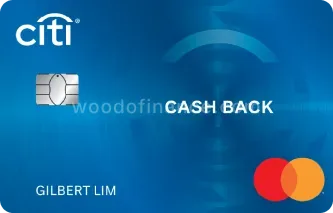
If you drive, commute by private ride, and eat out, the Citi Cash Back Card targets exactly those costs. It pays up to 8% on private commute such as Grab and Gojek, up to 8% on petrol worldwide, and up to 6% on both dining and groceries. At the pump, fuel savings reach up to 23.64% at Caltex, Esso and Shell once the 8% is counted.
You need to spend at least S$800 in the statement month to unlock the bonus rates, and all the boosted categories share a single cap of S$80 a month. Spend outside those categories earns 0.20%. The annual fee is S$196.20 a year. New cardmembers who apply online and spend S$800 in the first two months get S$300 cash back, with that offer running until 31 March 2027. Confirm the current offer before applying.
BOC NVMO Card
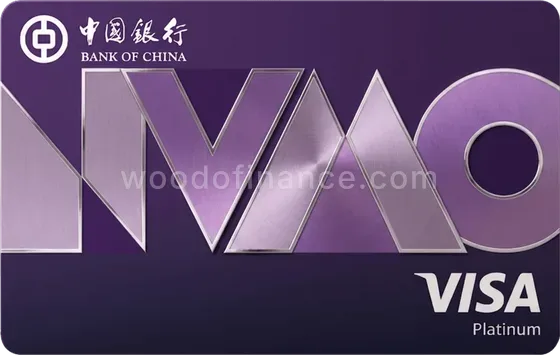
The BOC NVMO Card leans hard into food and entertainment. It pays up to 10% on dining and online food delivery, and up to 8% on streaming, digital media and event tickets. There's also up to 3% on transport, groceries and online shopping, and up to 3% at Singapore hospitals, vets and on insurance.
The bonus kicks in once you spend S$800 in the billing cycle, and the categories carry their own caps: dining is capped at S$25 a cycle, travel and entertainment at S$25, and shopping and lifestyle at S$25. Spend in cycles under S$800, or outside the categories, earns 0.30%. The annual fee is S$207.10 a year, waived in the first year. If eating out and food delivery dominate your statement, this card pays well.
How to choose a cashback card in Singapore for your spending
Start with the "What it earns" column, then look at how you actually spend. The headline rates on these cashback credit cards in Singapore only pay off if your spending matches the categories and clears the minimums. Almost every bonus here requires S$800 a month before anything boosted applies, so a card that pays 10% on paper can pay 0.20% if you fall short.
Weigh three things. First, the minimum spend: the CIMB Visa Signature, Citi Cash Back Card and BOC NVMO Card all want S$800 in a statement month, while the UOB One Credit Card wants a steady monthly figure plus 10 transactions. Second, the caps: CIMB caps each category at S$20 and the month at S$100, Citi shares one S$80 cap across its bonus categories, and BOC caps each group at S$25. Third, the annual fee, read against how much you'll realistically earn back.
If your spending is spread thin or unpredictable, a flat-rate card can beat a category card. The UOB UnionPay Card pays a flat 2% on all local and overseas spend with no annual fee, capped at S$50 a month, and charges no transaction fees on Alipay and WeChat Pay in China. The DCS Ultimate Platinum Mastercard pays a flat 2% with no minimum spend, 4% on direct airline and hotel bookings, all capped at S$200 a month. Both skip the hoops entirely.
How we picked these cards
This shortlist is drawn from the 55 cashback cards Woodo lists for Singapore. The figures here were recorded on 4 October 2026, and the order follows estimated yearly rewards on a typical spending mix, minus the annual fee; cards that publish no reward rates follow, cheapest annual fee first. No issuer pays Woodo for placement, and no issuer can move a card up the list. We check the listing every month. You can see the full set of cashback cards on Woodo's cashback card comparison for Singapore and filter them by fee, reward rate and network.
Your next step
Pick the two or three categories where your money actually goes, then match them against the table above. A driver who dines out will land on a different card than someone who buys everything online. If you're not sure where your spending concentrates, uploading a few months of statements to Woodo shows which categories dominate, and that's what decides the right card. When you're ready to compare, open the full credit card comparison for Singapore and sort by what you care about.
FAQ
Do cashback credit cards in Singapore charge an annual fee?
Some do and some don't. On this shortlist, the CIMB Visa Signature and the UOB UnionPay Card have no annual fee. The UOB One Credit Card and Citi Cash Back Card charge S$196.20 a year, the BOC NVMO Card charges S$207.10, and the DCS Ultimate Platinum Mastercard charges S$10 a month plus GST, which works out to S$130.80 a year with GST. Several waive the first-year fee: the UOB One, BOC NVMO and DCS cards all do. Weigh any fee against the cashback you'll realistically earn in a year, since a fee can wipe out a thin reward.
How is the cashback paid out?
Cashback is credited against your card spend, and the exact timing depends on each card's rules. Category cards like the CIMB Visa Signature, Citi Cash Back Card and BOC NVMO Card apply their bonus rates once you clear the monthly minimum, then cap the amount per category. The UOB One Credit Card pays quarterly, only after you hit the required monthly spend and transaction count across the whole quarter. Flat-rate cards such as the UOB UnionPay Card and DCS Ultimate Platinum Mastercard are simpler, earning on every purchase up to a monthly cap. Always read the cap, because that sets the real ceiling on what you take home.
What minimum spend do I need to earn the bonus rates?
Most category cards here need S$800 in a statement or billing month. The CIMB Visa Signature, Citi Cash Back Card and BOC NVMO Card all require S$800 before their boosted rates apply. The UOB One Credit Card is different: it asks for a steady S$600, S$1,000 or S$2,000 every month of the quarter, with at least 10 transactions a month. If you spend below the threshold, your rate drops sharply, to 0.20% on the CIMB and Citi cards and 0.30% on the BOC card. The flat-rate UOB UnionPay and DCS cards have no minimum spend requirement for their base rate.
Which cashback card is best if I spend mostly online and on groceries?
The CIMB Visa Signature fits that pattern best. It pays up to 10% on online shopping and up to 10% on groceries, as long as you spend S$800 in the statement month. Each category is capped at S$20 and the month at S$100, so the sweet spot is moderate, regular spend across both. It carries no annual fee, which means nothing erodes what you earn. If a lot of your grocery and online shopping sits with particular stores, check those merchants against the card's terms before you apply.
Are there foreign transaction fees when I spend abroad?
Yes, every card on this shortlist charges a fee on overseas spend. The CIMB Visa Signature charges up to 3% (2% CIMB plus 1% Visa or Mastercard), and the BOC NVMO Card charges 3% (2% BOC plus 1% Visa). The UOB One, Citi Cash Back, UOB UnionPay and DCS cards each charge 3.25%. One exception worth noting: the UOB UnionPay Card charges no transaction fees on Alipay and WeChat Pay in China, which helps if you travel there often. For frequent overseas spending, a cashback card is rarely the cheapest option.
Which card suits someone who wants simple, no-fuss cashback?
The UOB UnionPay Card and the DCS Ultimate Platinum Mastercard are the simplest. The UOB UnionPay Card pays a flat 2% on all local and overseas spend, with no annual fee and a S$50 monthly cap. The DCS Ultimate Platinum Mastercard pays a flat 2% with no minimum spend, 4% on direct airline and hotel bookings, capped at S$200 a month; its monthly service fee is waived after the first year with 8 retail transactions or S$800 a month. Neither card makes you chase categories or clear an S$800 threshold, so they suit people who want cashback without tracking rules.
What's the catch with the UOB One Credit Card's 3.33% rate?
The 3.33% only applies if you meet the spend and transaction rules every month of the quarter. You need to spend S$600, S$1,000 or S$2,000 each month, with at least 10 transactions a month, across the whole quarter. Miss one month and the quarterly cashback is lost. The upside is strong for people with steady spending: once you earn the cashback, selected merchants including McDonald's, DFI Retail Group stores, Grab, Shopee and SimplyGo rides earn up to 6.67% more. The annual fee is S$196.20 a year, waived in the first year.
What should I check before applying for a cashback card?
Confirm the current sign-up offer, since these change. On this shortlist the CIMB, Citi and DCS cards all list offers with end dates: CIMB's Samsonite gift runs to 30 November 2026, Citi's S$300 cash back to 31 March 2027, and DCS's Gojek vouchers and luggage to 30 November 2026. Check the live terms on each card's page before you apply. Also confirm the eligibility and income requirements with the issuer, read the cap on your top category, and make sure your normal spending clears any minimum. The card that pays most on paper is only worth it if your spending matches its rules.
Stop logging every coffee.Do it on a Sunday.
One PDF, once a month. Woodo's AI pulls every transaction, sorts by category, and shows you where the money went — finished before your coffee cools.
More from Woodo Blog

How to choose a travel credit card in Germany
The TF Bank Mastercard Gold is our top travel pick in Germany thanks to no annual fee, no foreign transaction fee and included travel cover. Here's how it compares with five other cards and which one fits your trips.

How to pick a travel credit card in Australia
The Qantas Money Everyday Credit Card is our top travel pick for most Australians thanks to its low A$99 annual fee and solid points earn. Here's how it compares with five other cards, plus how to choose for your own spending.
Which cashback credit card in the UK actually pays you?
Woodo's top cashback pick in the UK is the Santander UK Rewards Credit Card, which pays 3% on fuel, everyday travel and eating out in your first year. Here's how it compares with five other cards and which one fits your spending.